
Understanding Mycotoxin Risk in Poultry Feed
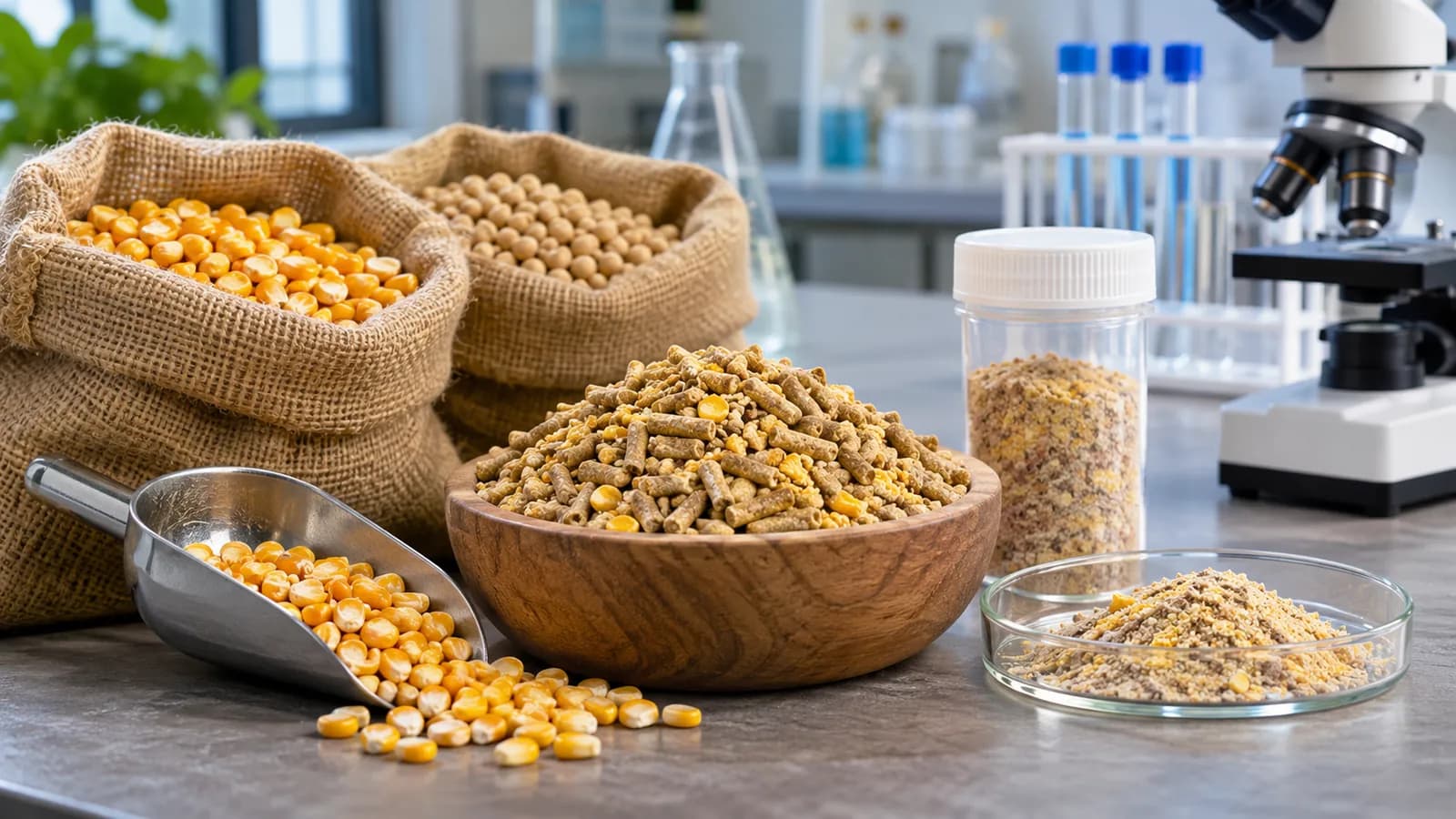
Mycotoxins are toxic substances produced by certain moulds under suitable environmental conditions. Feed ingredients can become contaminated in the field or during transport and storage. Because some toxins remain in an ingredient after they have formed, controlling mould growth and managing existing toxin contamination are related but different tasks.
Where the Risk Begins
Cereal grains and other agricultural ingredients can carry mycotoxins into a feed mill. Moisture, storage conditions, damaged material and the history of an ingredient lot can all be relevant to a risk assessment. Common toxins of concern in poultry include aflatoxins, fumonisins, ochratoxins and trichothecenes such as deoxynivalenol (DON) and T-2 toxin.
The effect of exposure depends on the toxin, its concentration, the duration of exposure and the birds affected. Poor growth or reduced production may raise concern, but these signs are not specific enough to diagnose mycotoxicosis.
Sampling and Testing
A useful investigation requires a representative sample of the suspect feed or ingredient and a test capable of detecting the toxins of concern. The laboratory should be consulted about sampling, sample handling and the appropriate analytical panel. A test result must be interpreted alongside the flock history, feed records and veterinary findings.
Testing for one toxin does not establish that every other toxin is absent. Likewise, a result from one sample should not be treated as proof that every part of a large ingredient lot has the same concentration.
Prevention and Response
Good purchasing controls, suitable storage, moisture management and regular inspection help reduce opportunities for mould growth. They do not guarantee that incoming ingredients are free of toxins. If contaminated feed is suspected of causing illness, the priority is to involve a veterinarian, investigate the source and replace affected material with suitable feed.
Mycotoxin-control additives have different mechanisms and evidence. A product shown to bind one toxin should not be assumed to control every toxin. Mould inhibitors can help prevent further fungal growth under appropriate conditions, but they do not remove toxin that has already formed.
Practical Takeaway
Mycotoxin management works best as a programme combining ingredient controls, storage practices, representative testing and a defined response to suspect feed. No single additive or visual inspection can replace that programme.